Agent Groups
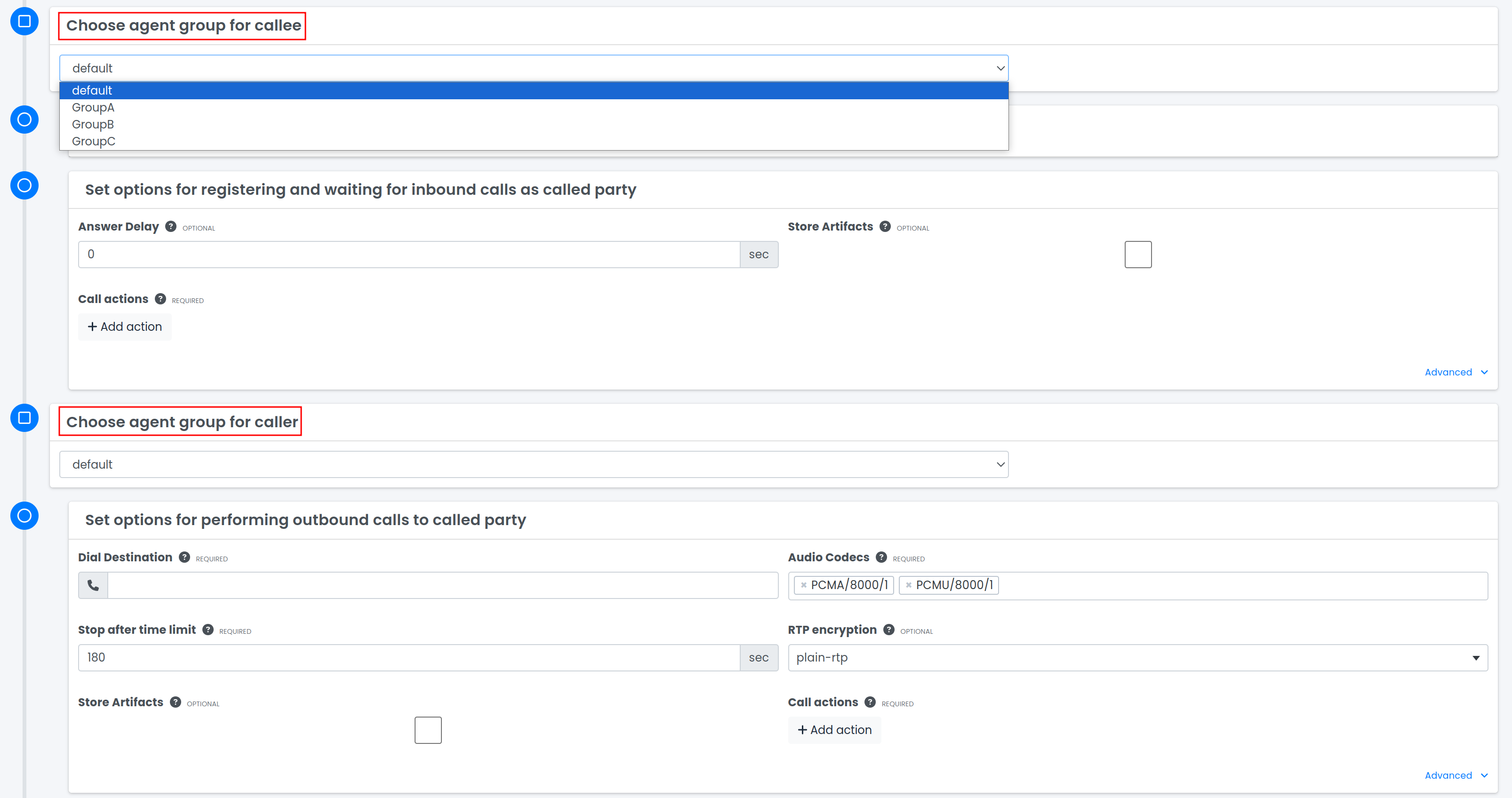
If you need to arrange your agents in a certain way, let's say by location, by server or by any other kind of classification, you can assign the agents of your private pools to different groups. And when setting up your test configs, you can select the group you want to pick the agents from.
Default group
By default every agent will belong to the default group. Once you explicitly configure your agent to join another group you must configure the agent to also join the default group if you want the agent to remain in the default group.
Creating a group
In your pools, you can create as many groups as you want, but there is no need to create them upfront. An agent can also belong to more than one group at the same time — just separate the group names with a comma in the configuration. It's as simple as adding an environment variable like --env SF_POOL_GROUP="my_group_name" when running the agent container and it will be assigned to the group(s). If a group doesn't exist, it will be created at the same time of the assignment.
# Run agent in this pool using Docker, assigned to two groups:
docker run \
  --pull always \
  --env SF_POOL_ID="abcdefgh-1234-abcd-1234-abcdefgh1234" \
  --env SF_POOL_SECRET="some-random-string" \
  --env SF_POOL_GROUP="my_group_name,my_other_group_name" \
  sipfront/agent:latest
Managing groups
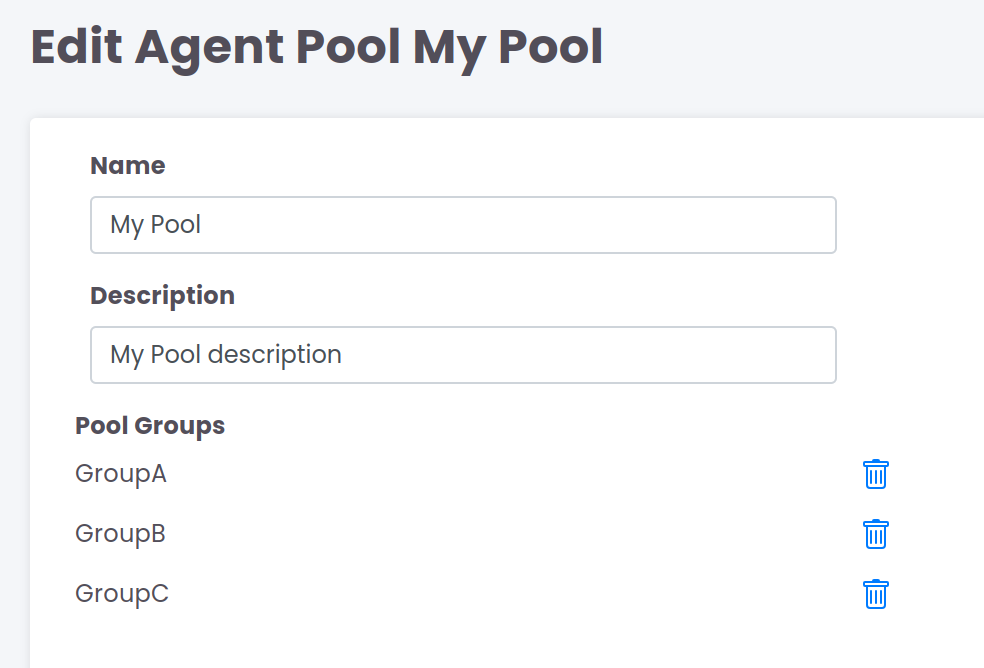
In the Account > Agent Pools section it's possible to see the available agents per group. In addition, if extra groups were created but are not required for your configurations anymore, you can delete them.